
LITHIUM: PREVENTING THERMAL RUNaway
Published January 6, 2026
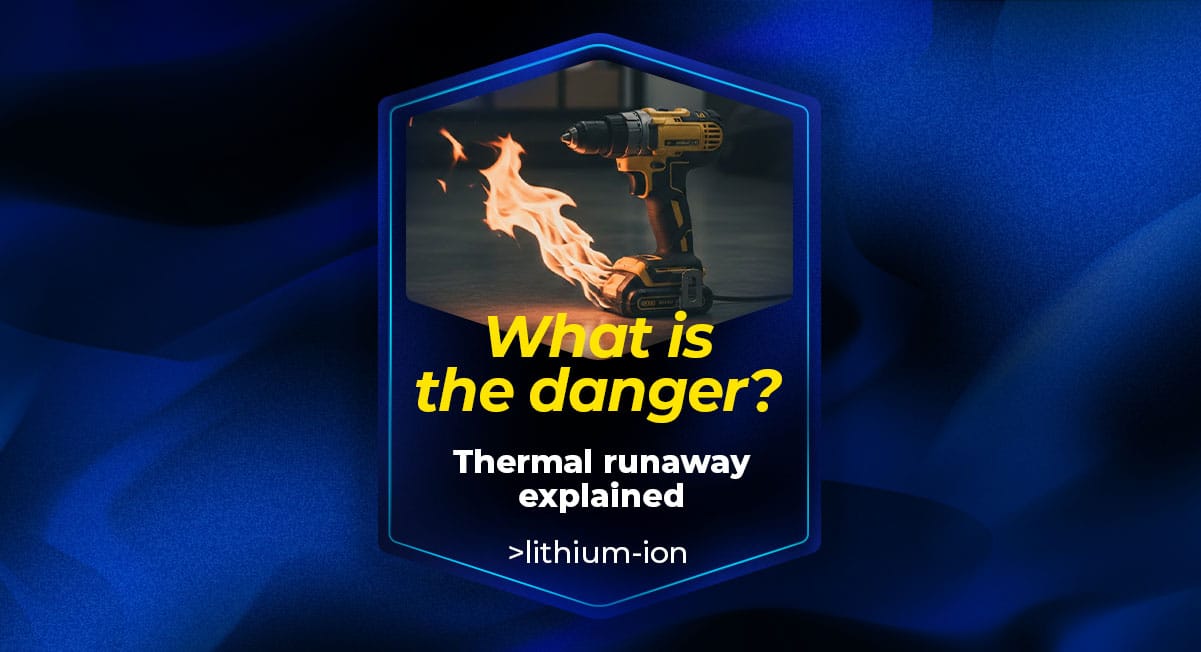
The rise of lithium-ion batteries in industrial sectors, local authorities and businesses comes with a major risk that is often underestimated: thermal runaway. This phenomenon can have catastrophic consequences if the appropriate preventive measures are not put in place. Thermal runaway is an uncontrollable chain reaction that occurs when a lithium-ion battery experiences an abnormal rise in temperature. The mechanism: Once triggered, this reaction is self-sustaining and accelerates rapidly, reaching temperatures above 800°C in a matter of minutes. Triggers: Mechanical shock, electrical overload, internal short circuit, manufacturing defect, or simply the natural ageing of the battery. The major danger: The speed of propagation. A single faulty cell can contaminate an entire battery pack. The consequences go far beyond a simple technical incident: Physical hazards: Intense flames, toxic fumes (hydrogen fluoride and heavy metals) and molten material projections. We will focus on these hazards in the near future. Difficulty extinguishing: These fires are complex to control because lithium reacts with water and burns even in the absence of oxygen. Other risks: Human risks, considerable material damage, prolonged business interruptions and legal liability. Safety is based on three fundamental pillars: A. ASSESSMENT AND STORAGE Risk analysis: Take into account the size, state of charge, age and technology of the batteries. Safety cabinets: Use cabinets designed to withstand thermal runaway (fire resistance up to 180 minutes, adequate ventilation and compartmentalisation B. TEAM TRAINING Know how to identify a damaged battery. Apply safe storage procedures. Know what to do in the event of an incident (tested emergency plan). Prevention is an ongoing process that requires: Rigorous maintenance: Visual inspection, ventilation and detection checks. Preventive replacement: Do not wait for ageing equipment to fail. Connected technologies: Use real-time monitoring systems to detect temperature anomalies. Conclusion: Being well equipped is not an option but a regulatory and ethical necessity. The safety of your employees and the sustainability of your business depend on it. Trionyx cabinets for storing lithium batteries offer you peace of mind and compliance! Any questions? Please do not hesitate to contact us at: sales@ecosafesa.com